
Crazanne Statue

Crazanne Statue

Crazanne statues are marble statues of indigenous deities collected in the Louvre.
The Giant Feet of Roman Emperor Constantine

The Giant Feet of Roman Emperor Constantine

Constantine's giant foot is 2 meters long and 1.5 meters high, making it one of the largest marble feet still standing in ancient times. It is part of a 12 meter tall seated statue. The original is at the Capitoline Museum in Rome. This scan is from a copy in front of the entrance to the Roman Empire Baths in Trier, Germany. The remaining giant feet, hands with fingertips pointing upwards, and the portrait of the emperor all outline a chilling image of the emperor.
The Abyss

The Abyss

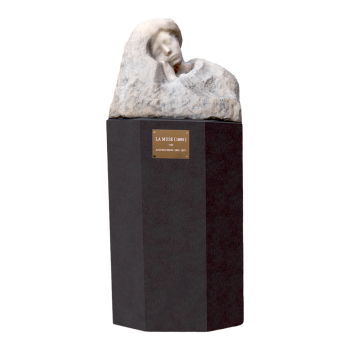
The Abyss "(L'Ab î me) is a marble statue that is 180 centimeters high, 260 centimeters wide, and 120 centimeters deep. This statue was purchased at a salon exhibition in 1901 and is now housed in the Osay Museum. Just Becquet was a French sculptor who was born in Besan ç on, Doubs, France in 1829 and passed away in Paris in 1907. His father was a goldsmith, and Beck initially received a classical education at a school in Besan ç on, earning a Bachelor of Philosophy degree before registering for study at a local art school.
Daughter of Count Almeidina

Daughter of Count Almeidina

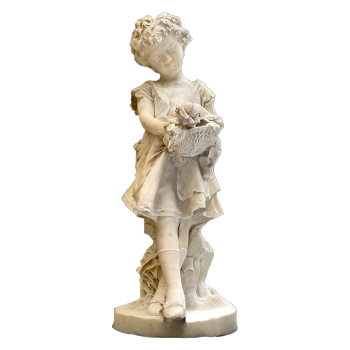
The Daughter of Count Almeidina "is a work created by Antonio Suarez dos Reis and currently housed in the Suarez dos Reis National Museum in Porto. This work depicts Louisa Guadalpe Guedes, daughter of Count Delfin Guadalpe Guedes of Almeidina. After organizing the "Retrospective Exhibition of Decorative Arts in Portugal and Spain", he was awarded the title of Count of Almeidina. This artwork is made of Carrara marble and depicts the image of a child with an almost angelic face.
3D Printing STL Format File: A Contemplating Woman

3D Printing STL Format File: A Contemplating Woman

Renneisance Church Angel Statue

Renneisance Church Angel Statue

The angel statues in churches during the Renaissance period are a type of artwork with unique aesthetic and religious significance. These angel statues often appear in art works such as murals, sculptures, and stained glass in European churches. Known for its elegant and refined image. They are usually presented in the form of beautiful women or children, showcasing the purity and elegance of angels through soft lines and intricate carvings. The angel statues in churches usually symbolize religious beliefs and the spiritual world. They showcase the purity and elegance of angels with exquisite images and exquisite craftsmanship, while playing an important religious role in churches, bringing comfort to people's religious beliefs and spirits
The Piet à da Palestrina marble statue of the Virgin Mary in Palestrina
The Piet à da Palestrina marble statue of the Virgin Mary in Palestrina

Piet à da Palestrina "is a marble sculpture from the Italian Renaissance period, dating back to around 1555 AD. It is currently on display at the Accademia Gallery in Florence. This sculpture depicts three characters, one of which is the body of Jesus Christ. This sculpture was attributed to Michelangelo's work in the first half of the 18th century.
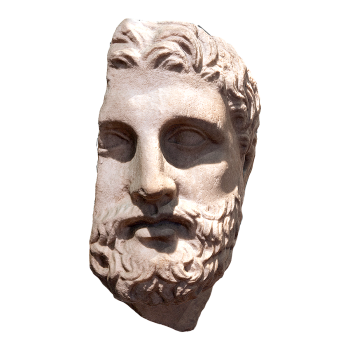
Marble statue of the head of a man with long beard

Marble statue of the head of a man with long beard

This marble statue is the head of a bearded man, possibly representing the ancestors of King Mausollos. This work was discovered around 350 BC in the main sculptural sediment north of the North Peripolis Wall, carved from marble. This statue is now on display at the British Museum.
The Madonna and Child painting created by Michelangelo
The Madonna and Child painting created by Michelangelo

Michelangelo Bonaroti's painting of the Virgin Mary, created around 1547-1555. The Cathedral Opera House Museum in Florence, Italy. This painting of the Virgin Mary is Michelangelo's penultimate sculpture. In 1555, the elderly Michelangelo destroyed this sculpture after discovering a defect in the marble. In 1671, Cosimo III de 'Medici purchased the reconstructed sculpture and placed it in the basement of San Lorenzo Cathedral. In 1722, it was transferred to the Florence Cathedral.
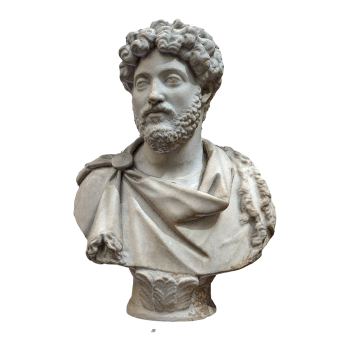
Marble bust of Roman Emperor Marcus Aurelius

Marble bust of Roman Emperor Marcus Aurelius

This marble statue is the bust of Roman Emperor Marcus Aurelius, wearing a tassel cloak. The height of this statue is 73.66 centimeters and it comes from Jason Magnus' house. The production date of this statue is approximately between 160 and 170 AD. This statue is now on display at the British Museum.
The marble statue "Ugolino and His Sons" collected in the Rodin Museum in Paris

The marble statue "Ugolino and His Sons" collected in the Rodin Museum in Paris

Ugolino and his sons are Ugolino marble sculptures made by Jean Baptiste Carpeaux in Paris in the 1860s. It depicts the story of Ugolino in Dante's Inferno, where a 13th century Count is imprisoned and starving with his children. This work is known for its expressive details, which opened up Karbo's career. It is currently housed in the Rodin Museum in Paris.
Baltimore City Monument Statue 'Mrs. Baltimore'

Baltimore City Monument Statue 'Mrs. Baltimore'

Lady Baltimore is located on the Battle Monument in the city center. Italian sculptor Antonio Capellano created the marble statue 'Mrs. Baltimore' in 1815. In the same year, this monument was adopted as the emblem of Baltimore, which also helped to give rise to the city's nickname "Memorial City". Interesting fact: Mrs. Baltimore's figure can be seen on the trash cans throughout the city.
Marble statue from the Roman Empire period, 'The Injured Amazon'

Marble statue from the Roman Empire period, 'The Injured Amazon'

In Greek art, the Amazon is a mythical race of female warriors from Asia Minor, often depicted fighting against heroes such as Hercules, Achilles, and Theseus. This statue represents a refugee who escaped from battle, losing her weapon and bleeding from the wound beneath her right breast. Her shawl was untied on her shoulders, a waistband was tied around her waist, and a temporary reins were tied around her horse's back. Despite her predicament, there were no signs of pain or fatigue on her face. She gently leaned against a pillar on the left, with her right arm elegantly resting on her head, a gesture usually used to indicate sleep or death.
Maria Sobanska bust created by Konstantin Lashka

Maria Sobanska bust created by Konstantin Lashka

The name of the statue is "Maria Soba ń ska's bust", created by artist Konstanty Laszczka in 1918. This artwork is carved from Carrara marble and is a life sized sculpture. The details of this work are handled perfectly. Maria Sobanska was born into a powerful aristocratic family in Skarzky and lived from 1887 to 1948. It is currently housed in the Gorice Regional Museum.
The marble statue of Venus de Milos from the ancient Roman Empire period

The marble statue of Venus de Milos from the ancient Roman Empire period

The Venus de Milos, also known as the Broken Arm Venus, was discovered on Milos Island in 1820 and immediately caused a sensation throughout Europe. It was contested by several countries, and the arms of the sculpture were unfortunately destroyed during the chaos. After many twists and turns, it was finally purchased by France as a birthday gift to King Louis XVIII of France, who then gave it to the Houston Museum of Fine Arts. From then on, Venus became a broken arm goddess. However, the lost arms instead interpret a flawed beauty.
Marble lion statue

Marble lion statue

Since the Han Dynasty (206 BC to 220 AD), lion statues have traditionally stood in front of Chinese imperial palaces, royal tombs, government offices, temples, as well as the residences of government officials and wealthy people, and are considered to have a strong mythological protective effect. They are also used in other art fields, such as door knockers and pottery. Paired lion statues are still a common decorative and symbolic element at the entrances of buildings such as banks, government agencies, and police stations.
Marble bust of the ancient Greek god Hercules

Marble bust of the ancient Greek god Hercules

Hercules (Ancient Greek: Ἡρακλῆς, Modern Greek: Iraklis, English: Heracles, also translated as Heracles, Heracles, Hercules, Hercules) is the greatest hero and demigod in ancient Greek mythology. After birth, he was initially named Alcides. The son of King Zeus and Alcmene, born with infinite strength.
Statue of Ar é thuse's Nymphe

Statue of Ar é thuse's Nymphe

This sculpture was created by Claude Poirier (1656-1729) and is known as the 'Nymphe of Ar é thuse'. It is made of marble, with a height of 0.99 meters, a length of 1.66 meters, and a width of 0.68 meters. This sculpture is now housed in the Louvre Museum in Paris, France. This sculpture was created between 1706 and 1711 and is exhibited alongside Jacques Prou's sculpture Amphitrite. In Greek and Roman mythology, Nymphes (fairies or nymphs) usually reside in mountains, forests, and rivers.
The marble statue of Leonardo da Vinci on Mount Pinzio in Italy

The marble statue of Leonardo da Vinci on Mount Pinzio in Italy

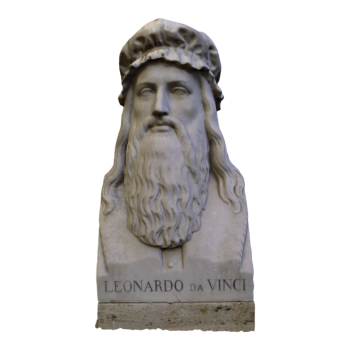
Mount Pianzio is a mountain located in the northeast quadrant of the historical center of Rome. This mountain is located to the north of Quirinal Mountain, overlooking the Place of Matthias. It is located outside the original boundaries of ancient Roman cities and is not one of the seven mountains of Rome, but it is situated within the city walls built by Roman Emperor Aurelian between 270 and 273. Villas and Gardens In the late Roman Republic, several important families owned villas and gardens on the southern slope, including the Lucius Garden created by Lucius, the Saluste Garden created by historian Saluste, the Pompeian Garden, and the Archillion Garden. This mountain was called Garden Mountain during the Roman era.
The marble statue "Weeping Angel" created by William Wetmore Stoy
The marble statue "Weeping Angel" created by William Wetmore Stoy

The Weeping Angel "is a sculpture created by American sculptor William Wetmore Storey in 1894 for the grave of his wife, Emmeline Storey, in the Protestant cemetery in Rome. The full name given to it by William Wetmore Stoy is' The Sad Angel Weeps on the Demolished Altar of Life '. This is Stori's last important work before his death, one year after his wife passed away. The Metropolitan Magazine, published in 1896, documented the creation process of this statue: according to this account, the death of his wife had such a great impact on Stori that he lost interest in sculpture.
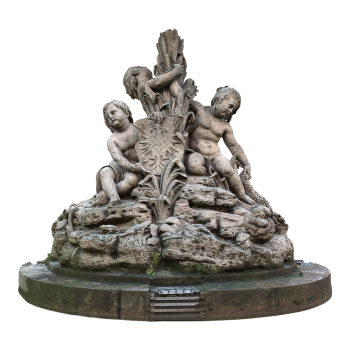
The fountain "Three Little Angels" in Noluzanetskyi Park, Brj, Czech Republic

The fountain "Three Little Angels" in Noluzanetskyi Park, Brj, Czech Republic

This marble fountain named 'Three Little Angels' is located in Luzhanetskyi Park in Brno, Czech Republic. There are sculptures of three little angels on this fountain. This is a popular decorative element from the Baroque, Rococo, and 19th century historical periods, originating from the Renaissance's analogy of ancient love gods and medieval angels, symbolizing children wearing horns of abundance. This fountain is created by F Melnik was made in 1860 and rebuilt in 2000.
The marble statue of Lady Elche from the Iberian Peninsula in medieval Spain

The marble statue of Lady Elche from the Iberian Peninsula in medieval Spain

The Iberian sculpture is located at the National Archaeological Museum in Madrid, Spain. The museum is located on Serrano Street, adjacent to Cologne Square, and shares a building with the National Library of Spain. The museum's collection mainly comes from the Iberian Peninsula, from prehistoric times to early modern times. However, it also has different collections from outside Spain, especially from ancient Greece, whether from Greater Greece or ancient Egypt, and even a small portion from the Near East.
The marble statue of the ancient Greek classical period, known as the 'Giant Right Foot Statue'

The marble statue of the ancient Greek classical period, known as the 'Giant Right Foot Statue'

A huge right footed statue, once part of a statue several times its actual size. This statue is made of Parian marble. In ancient times, only the images of gods and emperors were made to such a scale. This statue is wearing a complex Greek style sandal, which first appeared in the 4th century BC. This statue is currently housed in the British Museum in London.
The marble statue of Alexander the Great from the ancient Greek Empire period

The marble statue of Alexander the Great from the ancient Greek Empire period

The statue was made between the 2nd and 1st centuries BC and came from Alexandria, Egypt. The head of the statue has been cut to accommodate a separately made body. The back of the statue has been processed to receive the remaining parts of hair made from other materials. Alexander the Great was the king of the ancient Greek kingdom of Macedonia, located in present-day northern Greece and neighboring countries. Under his leadership, from 336 BC to 323 BC, Alexander the Great conquered Greek city states, the Persian Empire, and established over 70 cities, creating an empire spanning three continents and covering approximately two million square miles.
1 2 3 Next